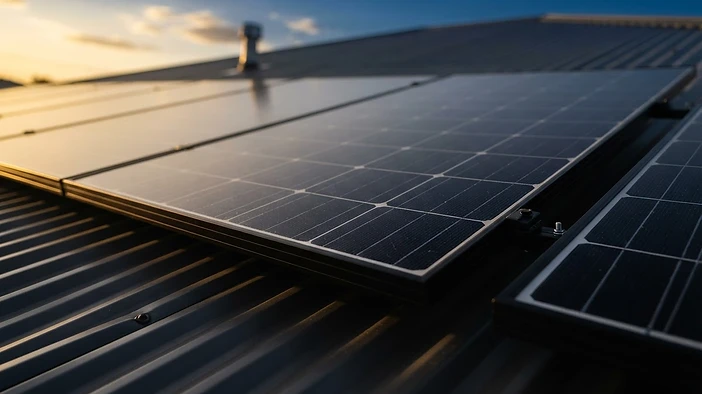
Going off-grid means designing a system that meets your needs without the grid as a backup. Here are the key things to consider before buying an off-grid solar system.
An off-grid solar system gives you complete energy independence — no grid connection, no power bills, no outages from network faults. But because there's no grid to fall back on, the system has to be sized and configured correctly from the start. Here's what to consider before buying an off-grid solar system.
Your energy needs and load profile
Everything starts with understanding how much power you use and when. List every appliance, its wattage and how many hours a day it runs. This load profile determines the size of every other component — undersize it and you'll run out of power; oversize it and you'll overspend.
Be realistic about seasonal variation: winter usually means less sun and more heating load, which is the hardest combination for an off-grid system.
Solar panel sizing
Your solar array must generate enough energy to cover your daily use and recharge your batteries, even on shorter winter days. Off-grid systems are typically oversized relative to consumption to build in a safety margin for cloudy periods. A common rule of thumb is to size the array to produce at least 1.3 to 1.5 times your average daily energy use.
Battery bank capacity
The battery bank is the heart of an off-grid system — it stores energy for use when the sun isn't shining. You'll need enough capacity to cover your evening and overnight use, plus a buffer for consecutive cloudy days (autonomy). Lithium batteries are now the standard for off-grid thanks to their long life, depth of discharge and efficiency. Battery storage sizing is the single most important decision in an off-grid design.
Inverter and charge controller
The inverter converts the DC power from your panels and batteries into the AC power your appliances use. For off-grid, you need a battery-based inverter/charger sized to your peak load — the surge when multiple appliances start at once. The charge controller regulates the flow of power from panels to batteries; a quality MPPT controller maximises the energy you harvest.
Location and sunlight
Your property's solar resource dictates everything. Consider shading from trees, hills and buildings, the orientation and tilt of your panels, and local weather patterns. A site with poor winter sun will need a larger array and battery bank, increasing cost.
Backup generation
Even a well-designed off-grid system can be stretched by an unusually long cloudy spell. A backup generator — diesel, petrol or increasingly a second battery bank — provides peace of mind and protects your batteries from deep discharge during extended bad weather.
Quality components and professional design
Off-grid systems are unforgiving: a single undersized component can leave you without power. Use quality, warrantied components and have the system designed and installed by Clean Energy Council accredited professionals. Our in-house team designs solar for homes and off-grid systems around your actual site and usage.
Budget and maintenance
Off-grid systems cost more than grid-tied solar because of the battery bank and specialised inverter hardware. Balance upfront cost against long-term reliability — cheap components cost more over time. Plan a maintenance schedule to keep panels clean, batteries healthy and connections tight.
The bottom line
A correctly designed off-grid system delivers true energy independence for decades. Get the load profile, battery sizing and component quality right, and you'll enjoy reliable power without a power bill. Talk to our team about designing an off-grid system for your property.